



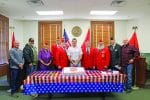


Polk County, being officially established on November 30, 1844, will celebrate its 170th birthday in just a few days. A land that is covered in beauty and full of history and tradition, Polk County is a land all its own.
In the last 170 years, the area has seen war and peace, prosperity and poverty, notability and obscurity. Polk County has more stories than could be told. Here, we will focus on the greatness of her history, the importance that we should remember, and the grandeur that can still be seen of Polk County and her 170 years of impact on the lives that have called Polk County their home for generations.
People began to settle in the area around 1830, when it was a part of Sevier County. In 1844, the two were separated and the area was named after the current President of the United States, James K. Polk. The timber industry, which encouraged the railroad, was a main factor in why many moved here, along with the beauty of the mountains that cover the landscape.

Dallas, named for President Polk’s Vice President, George Dallas, was the first county seat, having several courthouses built and burned, and many of the oldest records were lost. What little that survived can be seen in special collections at the University of Arkansas in Fayetteville, and now, thanks to the efforts of longtime history teacher and preserver Harold Coogan, some can be found in the Harold Coogan Special Collections room in the RMCC Library.
Many of the towns of Polk County were established after the railroad boom. Arthur Stilwell, founder of Kansas City Southern (KCS), is credited for the establishment of the railroad system here, naming towns after kinfolk, investors, and employees. According to The Encyclopedia of Arkansas, Hatfield, founded before the Civil War and originally named Clayton Spur, was renamed after a railroad worker killed in a blasting accident, Sam Hatfield. Vandervoort, was named after Jan De Goeigen’s mother’s maiden name, which had originally been named after his wife’s maiden name, Janssen. Wickes was named after Thomas Wickes, the second vice president of a company owned by Stilwell’s friend, George Pullman.
Mena’s name comes from a nickname of Jan de Goeigan’s wife, Folmina Margaretha Janssen DeGeoijen, he called her ‘Mina.’ Janssen Park was named after her maiden name. De Goeigan was a Dutch coffee merchant who helped finance the completion of the railroad, and was a good friend to Stilwell. Mena quickly became the largest town in the county and was named the county seat in a special election on June 25, 1898.

Polk County has long been known for its timber industry; however, it also boasts a farmer and cattleman’s paradise, beautiful lakes and rivers, and is home to Arkansas’ second highest peak, Rich Mountain, which stands 2,861 feet, and has the crown jewel of the county, Queen Wilhelmina State Park and Lodge, sitting atop the majestic mountain.
More than 225,000 acres of the beautiful Ouachita National Forest stand in the county. According to Local.Arkansas.gov, Polk County “contains, in a single square mile, more species of wild plants, flowers, and weeds in their natural state than can be found anywhere else in the world on a similar tract of land.”
The fresh air of the county has been contributed to help with longevity of life, having articles written over the years about the unusual number of centenarians Polk County has had.
Many famous and successful people have come out of Polk County as well. Dorothy Shaver, the first female president to head a multi-million dollar corporation, Lord and Taylor, was raised on Port Arthur Street in Mena. T. Texas Tyler, a famous country / western singer spent time living with his grandparents here. Also, widely known comedic duo, Lum and Abner, held residence in the county, among many more. It is said that famous outlaw, Jesse James, used the cabin in Janssen Park as a hideout.

Even through controversial periods, such as being home to Commonwealth College, and being a county full of ‘sundown’ towns, the County has been known as a quiet section of western Arkansas, stuck in between mountains, taking more than an hour to get anywhere ‘worth going.’ But isn’t that part of the beauty of being a Polk County citizen? Knowing that our home hasn’t been invaded by the influence of modern day, knowing that we share freedoms no longer seen in the rest of the country, knowing that our neighbors still help one another, we take pride in our County.
Although there are no official celebrations planned, hopefully, on November 30, each of Polk County’s citizens will have a toast to the founders, the past and present citizens, and God’s blessings of living in our sleepy little town that shuts down by 9 p.m. It truly is one of the most beautiful and serene parts of our glorious nation, and we should be proud to live in Polk County, Arkansas.
Keep watching in the Pulse for more in-depth articles of the unique people, atmosphere, and history that Polk County has offered for 170 years, and counting.

About Author

Jeri Pearson
Jeri is the News Director for Pulse Multi-Media and Editor of The Polk County Pulse. She has 10 years of experience in community focused journalism and has won multiple press association awards.


More Stories
Polk County Fair Catalog 2026
Driver hit by CPKC locomotive engines
Texas equine herpes outbreaks puts Arkansas, Texas, Oklahoma horse communities on alert